A list circulates whenever someone asks what to build an AI product on: GitHub for versions, Claude for code, Namecheap for the domain, Cloudflare for DNS, Vercel for hosting, Clerk for auth, Supabase for the backend, Upstash for cache, Pinecone for vectors, Resend for email, Stripe for money, PostHog for analytics, Sentry for crashes. Thirteen entries, twelve of them labelled free, and one price tag — Claude at $20 a month.
We pulled all thirteen vendor pages on 2 November 2026 and compared what the list claims with what each vendor publishes today. Nine entries hold. One is stale. One is incomplete in a way that changes the arithmetic. One is free only under a licence that excludes the exact thing most people in that thread are trying to do.
What we did, and what we did not do
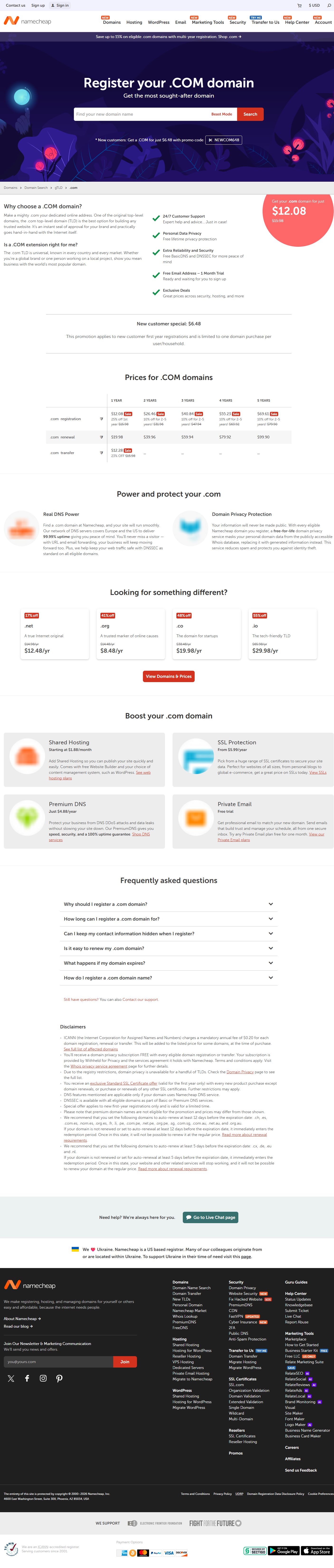
This is a terms-level check: we read official pricing and policy pages, from a logged-out browser, on 2 November 2026, and saved the text layer of each page next to this article. No paid account was opened, no checkout was completed, so nothing here is a statement about what a specific invoice would total — only about what each vendor prints. Two fetches needed comment: Namecheap returned HTTP 403 to a direct request, so that page was re-fetched in a real browser and the price table plus a full-page screenshot are both in the evidence list. Stripe’s pricing page is regional and served our network the Hong Kong rate card, which is disclosed below rather than smoothed over.
The three figures that do not hold
Namecheap’s “$12/year” is the first year, not the price. The .com page (USD storefront) prints $12.08 against a struck-through $15.98, with the line “Sale / 25% off 1st year” and a new-customer special of $6.48. The row underneath is what you actually live with: .com renewal $19.98 for one year, $39.96 for two, and a mandatory note that “ICANN … charges a mandatory annual fee of $0.20 for each domain registration, renewal or transfer”. Over four years at published prices that is $12.08 + $19.98 + $19.98 + $19.98 = $72.02, roughly 50% more than “$12 × 4” implies. If the domain is the part you care about, the renewal line is the line to compare, not the promo.
Stripe’s “2.9%” is one region’s percentage and never the whole fee. Stripe’s own page does not print a single global number — our capture shows 3.4% + HK$2.35 per successful domestic card, 3.4% + US$0.30 when settling in USD, plus 0.5% for international cards and 2% when currency conversion is needed, under the heading “Standard pricing” and a note that the figures apply only to Hong Kong. The structural point the list misses is the second term: there is always a fixed cents amount on top of the percentage. That is visible on a third-party vendor’s own page — Clerk, which resells billing, spells its composition out as “Stripe 2.9% + Stripe transaction charge $0.30 + Clerk Billing 0.7%”. A “2.9%” quote describes the US card rate, not a universal price, and on a $5 sale the fixed term dominates the percentage term.
Vercel’s free tier is licensed for non-commercial use. This is not a quota, it is a policy line, and it is in two places: the Hobby plan doc says “the Hobby plan restricts users to non-commercial, personal use only”, and the pricing FAQ repeats “Our Hobby plan is for personal, non-commercial use.” The same FAQ closes the escape hatch: “If you have a free Hobby account, you are limited to the usage caps and cannot purchase additional usage.” So a prototype blog is fine on $0/mo; a project that takes money, runs ads, or gates anything behind a paywall belongs on Pro at $20 /mo. — which turns the thread’s “$0 stack” into $240 a year for the one component nobody priced.
Where the free tiers actually stop
The other entries survive, with limits attached. Clerk is “Free Up to 50K Users” with a hard “50,000 MRU limit per app” (a user counts as retained when they return 24+ hours after signing up). Supabase Free carries “500 MB database size” and the sentence that kills demos: “Free projects are paused after 1 week of inactivity. Limit of 2 active projects.” Upstash Free is one database, 250 MB, 10 GB monthly bandwidth and 500K monthly commands — about 16K a day, before pay-as-you-go at “$0.2 per 100K commands”. Pinecone Starter is Free with “Up to 2 GB” storage, 2M write units and 1M read units per month; the flat paid step is Builder at “$20/month”, and Standard starts at a “$50/month min. usage”. Resend is “$0 / mo 3,000 emails / mo” — but its docs add the sharper constraint: “daily email quota of 100 emails/day and 3,000 emails/month. This quota includes both sent and received emails.” A launch-day verification flood stops at 100. PostHog gives “1M events” of analytics free with no card. Sentry Free covers “5k errors” a month, with Team at “$26/mo”. GitHub Free is “$ 0 USD” with unlimited public and private repositories, and Team is “$4 USD per user / month”. Cloudflare DNS is “for free” including the API. And Claude Pro is genuinely “$20 if billed monthly”, or “$17 Per month with annual subscription discount ($200 billed up front)”, with Claude Code listed as a Pro inclusion and Max at “$100 Per month” if you need volume — the free plan’s “Limited usage every 5 hours and every week” is the constraint that pushes coding work up that ladder.
How to read a stack list like this
The list format is the problem, not the tools. Every figure in it was true on some day, and none of them carry the second fact that decides cost: what renews at, what the fixed fee is, what the licence permits, or what the quota resets on. We apply the same rule to our own pages: see how to verify a SaaS tool before paying for the checks behind this article, the sites that publish dated software prices if you want a third party to watch a rate for you, and which review sites actually test before quoting numbers. For transactional email specifically, the same two-number problem (monthly volume versus daily quota) is why we check Brevo pricing against its own page rather than against a screenshot.